Texture and Pattern in Residential Facade Design
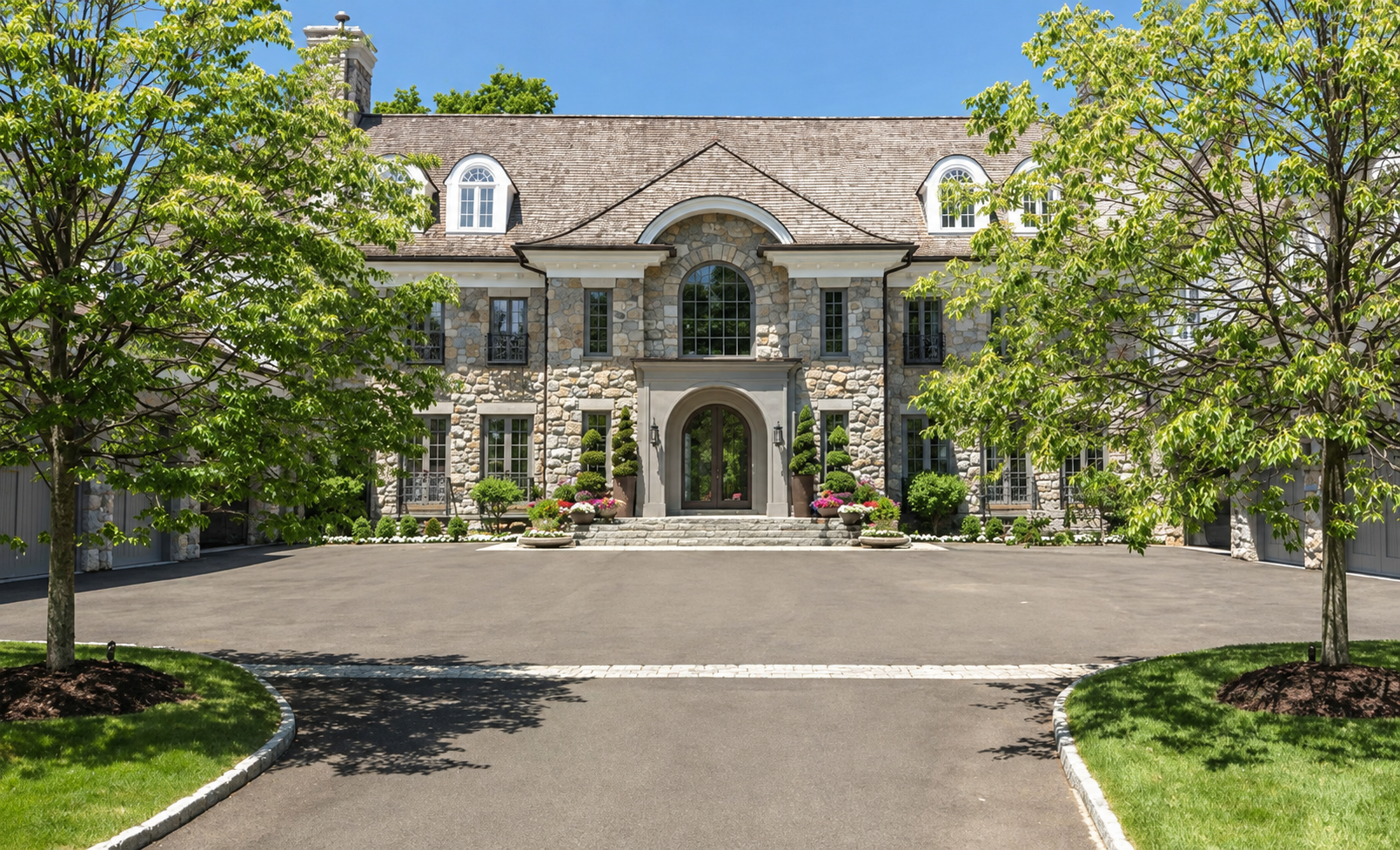
A home’s facade creates a lasting first impression. Thoughtful combinations of texture and pattern add depth, visual interest, and architectural character. At Steven Mueller Architects, we thoughtfully pair materials with architectural elements to give each residence its own distinct character in Greenwich, Connecticut, and beyond.
What Do Texture and Pattern Mean in Facade Design?
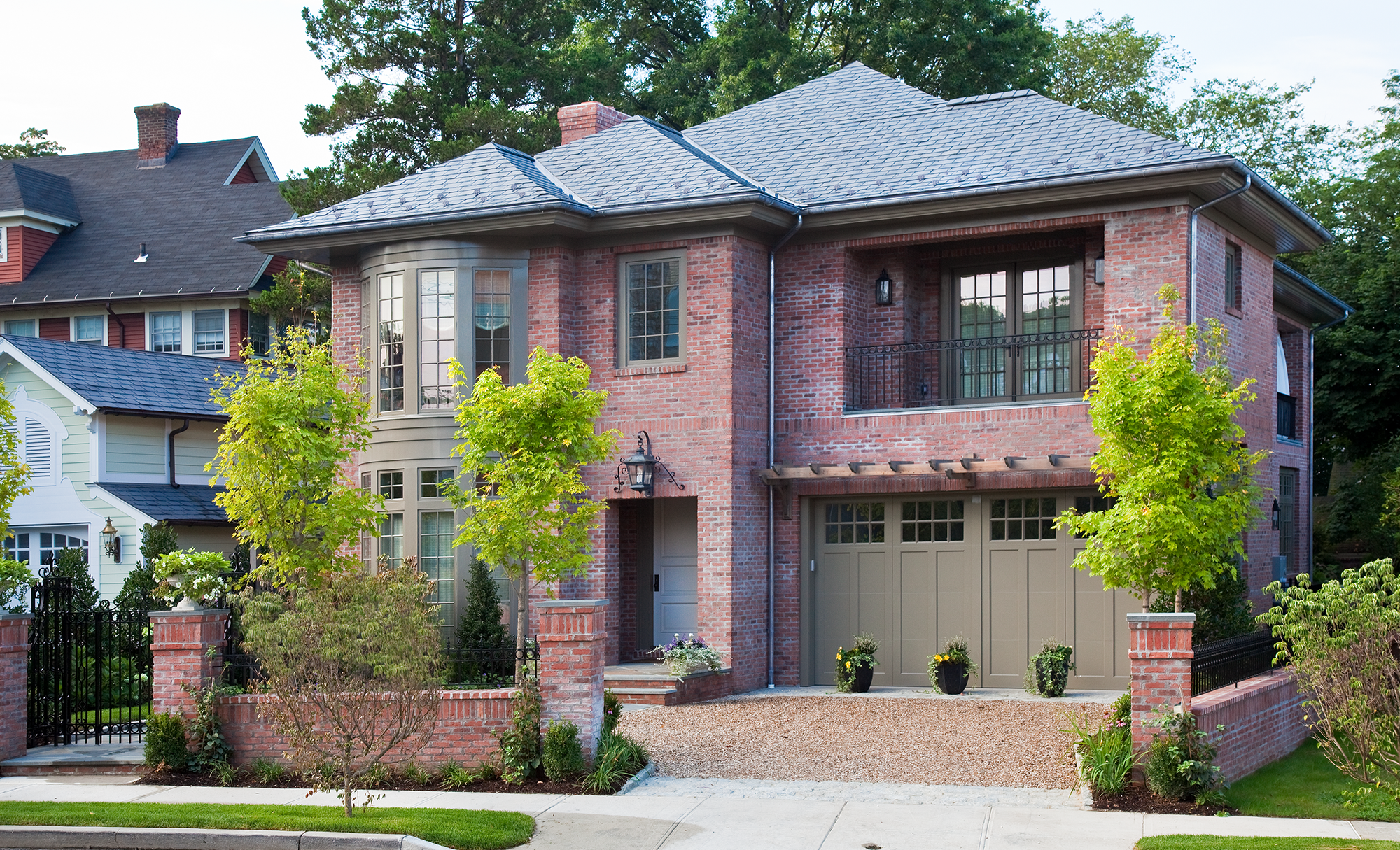
Texture and pattern are closely related, but each serves a different purpose. Texture comes from the physical and visual qualities of a material. Natural stone and brick, for example, introduce depth, variation, and a sense of permanence. Pattern emerges through the repetition and arrangement of architectural elements. Rows of shingles, repeating gables, complementary rooflines, and aligned windows can guide the eye across the home.
It Starts With the Initial Concept Sketch
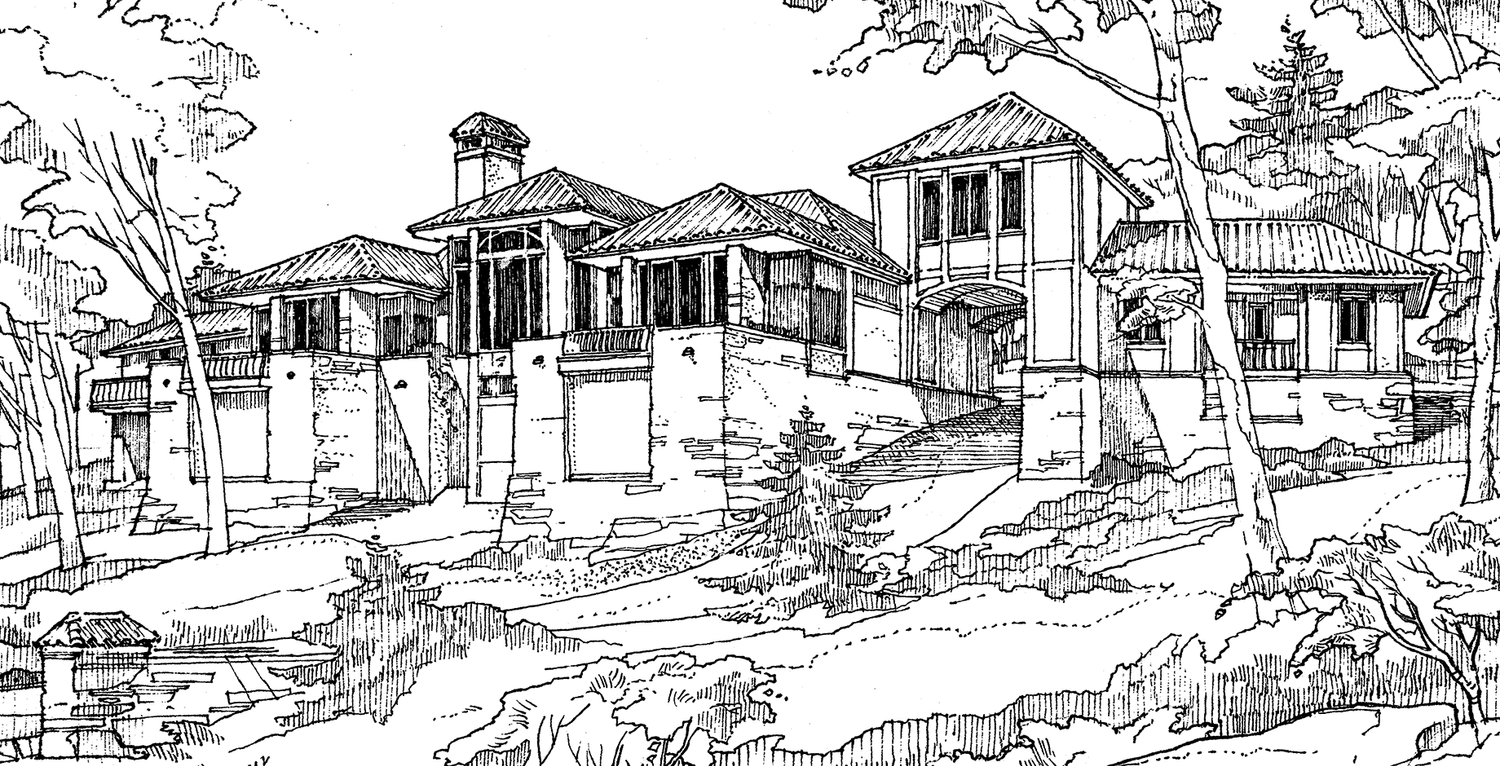
During the initial concept-sketch phase, we study the home’s overall form. The sketch establishes where visual repetition and material transitions may have the greatest impact. It can also reveal where a change in texture could emphasize an entrance, distinguish a connecting structure, or help break down the scale of a larger residence.
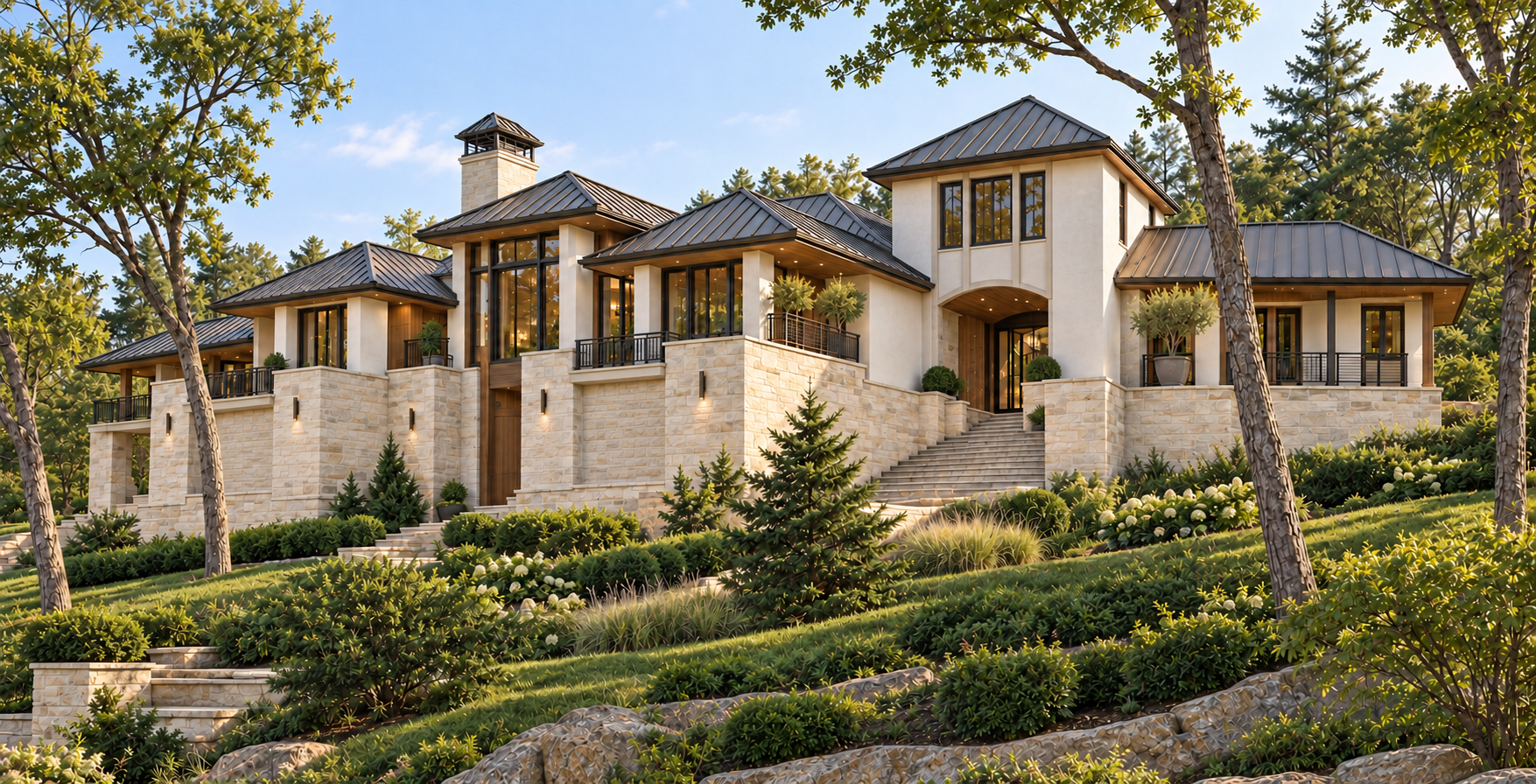
As the concept progresses into a 3D rendering, these relationships become easier to evaluate from multiple perspectives. The team can study how materials wrap around corners, how roof forms relate to one another, and how light and shadow affect the depth of the facade. This process helps ensure that the final material palette supports the original architectural concept.
Combining Exterior Materials With Intention
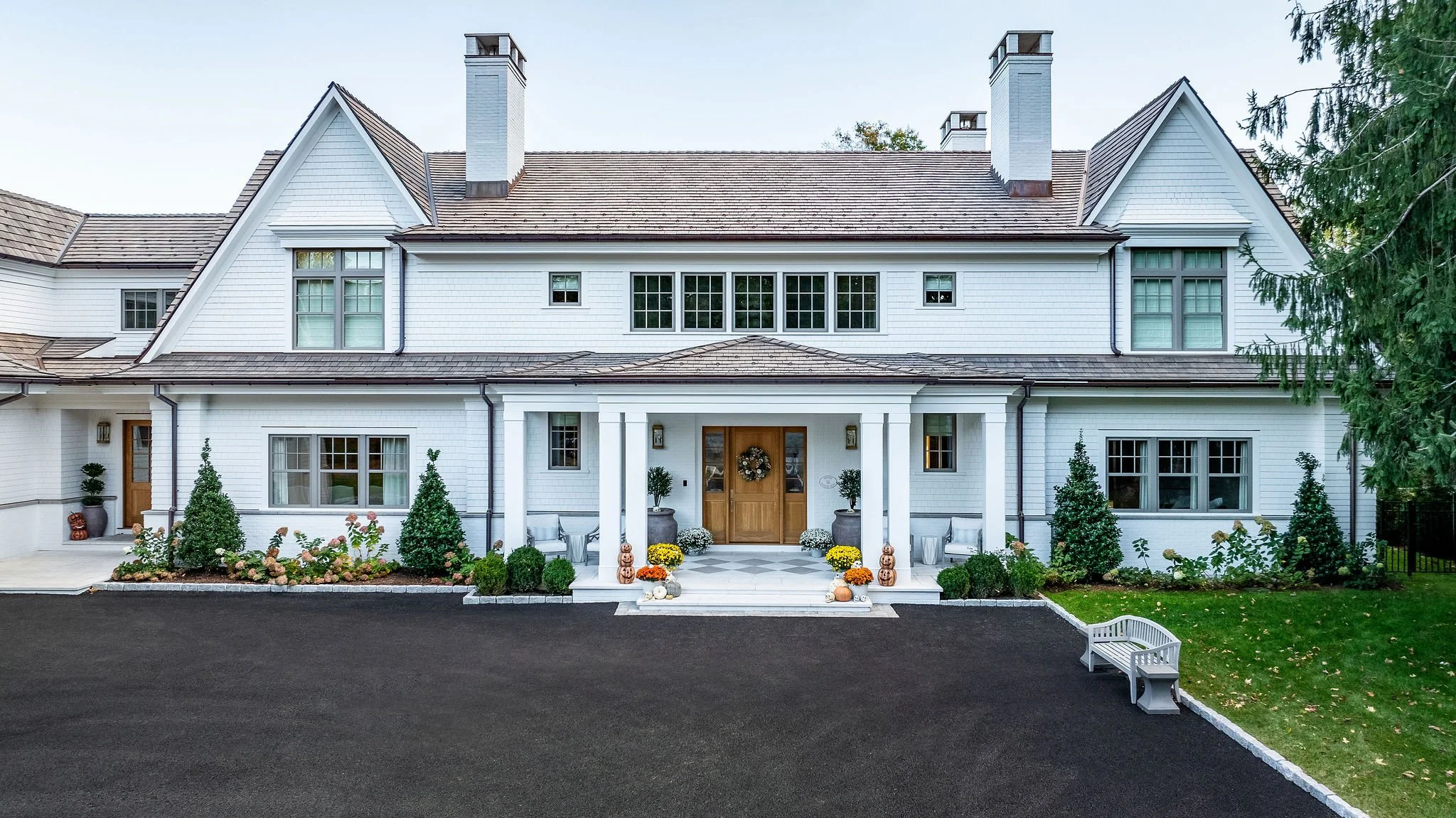
At SMA, we typically establish a primary material to define the residence, while complementary finishes highlight features such as entrances, dormers, and connecting wings. In projects such as our quintessential Country Shingle Style, the exterior conveys both warmth and grandeur. The most notable combination is the textured palette of cedar shingles paired with crisp white trim. The materials feel like an integral part of the architecture, not applied decoration.
Color can also unify contrasting materials. White-painted shingles and brick create a consistent backdrop, while the warm wood doors and brown roof introduce natural contrast. Dark window frames, gutters, and metalwork add definition without overwhelming the lighter facade. Rather than following a temporary trend, these decisions should feel appropriate for the home’s proportions, setting, and architectural influences. This approach allows the finished home to feel distinctive while remaining timeless.
Award-Winning Architect Steven Mueller, AIA
Based in Greenwich, Connecticut, Steven Mueller Architects guides residential projects from initial concept through construction. As an award-winning firm, we bring a cohesive architectural approach to each residence, ensuring that its form, materials, and details respond thoughtfully to the property and surrounding landscape.
If you are planning a custom home or renovation in Greenwich, Fairfield County, or Westchester County, contact us to learn more about our residential architecture services.